
Generating evidence for public policy design
What is MIPP?
The Millennium Institute for the Study of Market Imperfections and Public Policy (MIPP) is an interdisciplinary research center bringing together leading academics and professionals committed to developing evidence-based public policies.
Our work focuses on four main areas: business productivity, innovation, labor markets and regional development. Through rigorous research and collaboration with key stakeholders, we seek to contribute to the design and implementation of policies that promote inclusive and sustainable growth.
MIPP en cifras
Research Areas
Political Economy
Institutions, political behavior, and their impact on the design and outcomes of public policies.
Market Design and Regulation
Design of markets and institutions to promote efficiency, competition, and welfare.
Data and Public Policy
Data analysis and empirical evidence to evaluate public policies and understand economic and social phenomena.
Featured Initiatives
Programs and initiatives that drive research and collaboration
Aprende Central
Curso de educación económica y financiera para la ciudadanía, desarrollado junto al Banco Central de Chile. Capacitación online, gratuita y asincrónica, orientada a la comprensión de conceptos económicos y su aplicación en la vida cotidiana.
More information
Escuela de Verano en Economía
Programa intensivo de formación avanzada en economía, con cursos dictados por académicos de universidades internacionales. Dirigido a estudiantes de pregrado avanzado y posgrado, combina aprendizaje de frontera con generación de redes académicas.
More information
Gazette
Revista anual dedicada al análisis económico de diferentes temáticas sociales.
More information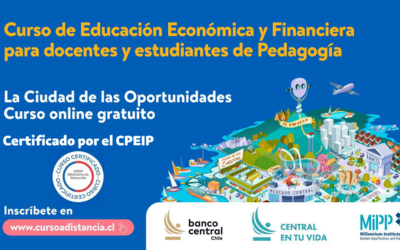
La Ciudad de las Oportunidades
Curso gratuito de educación económica y financiera para docentes, desarrollado junto al Banco Central de Chile. Más de 2.500 educadores de todo Chile han participado en versiones anteriores, fortaleciendo sus conocimientos y herramientas para la enseñanza de la economía.
More information
Miradas MIPP
Plataforma de divulgación científica y económica que transforma investigaciones académicas del MIPP en contenidos noticiosos y accesibles.
More information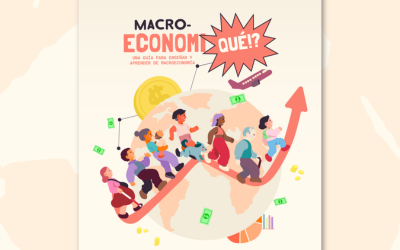
Serie “Economi-Qué?!”
Serie de libros digitales gratuitos que buscan acercar conceptos económicos a la ciudadanía mediante un lenguaje claro y ejemplos cotidianos. Desarrollada por el MIPP, aborda contenidos de micro y macroeconomía con un enfoque didáctico y accesible.
More informationLatest Events
Seminars, workshops and activities organized by MIPP
Why is the College Premium Falling? The Role of Composition
Abstract: Recent studies suggest that the increasing supply of college-educated workers in Latin American countries has negatively impacted returns to skill over the last two decades, as evidenced by the decreasing college premium. In this paper, we show that changes in the college premium do not accurately represent shifts in returns to skill, particularly in the context of a significant expansion in tertiary education. Using novel data with approximately one million college graduates from 20 different cohorts in Brazil, we find that returns to skill have not decreased; in fact, they increased by 24% over 16 years. The supply of college-educated workers has grown, primarily from newer, lower-ranked, and lower-wage-premium universities. Changes in the composition of college workers seem to have driven a decrease in the college premium, even though returns to skill are increasing. Using a simple supply and demand framework (Katz and Murphy, 1992) we show that skill-biased technical change (SBTC) increased by 3% per year over a 12-year period, in contrast to the apparent-0.1% yearly decrease indicated by the unadjusted data.
View detailIs There a «Scarlet E? The Effects of Public Eviction Records on Low-Income Households
Abstract: Housing advocates, media outlets, and policymakers have long argued that a public eviction filing record—often referred to as the “Scarlet E”—carries significant consequences, particularly for low-income households. In this paper, we exploit variation induced by a record-sealing policy in Illinois to provide the first causal estimates of the effect of a public eviction filing on residential mobility, neighborhood quality, homelessness, and financial health. Two findings stand out: (i) sealing eviction records at the time of filing prevents tenant screening companies from accessing case information, whereas retroactive record sealing is ineffective in restricting public access; (ii) tenants with public evictions records are more likely to live doubled up with friends or family within the first year of the filing. Our results suggest that housing instability due to public eviction filings manifests primarily through household doubling up rather than through the more extreme forms of homelessness.
View detailBeyond Beliefs: Experimental Evidence on Follow-Through Frictions at School Transitions
Abstract: A key puzzle in economics is why households underinvest in education despite high returns. While standard explanations focus on information, this paper highlights the role of follow-through frictions in a school-level RCT in 231 primary schools in Quiché, Guatemala. We document a substantive intention-action gap: 65% of students plan to enroll in secondary school yet 34% of those fail to follow-through on their plans. To causally isolate the effect of follow-through frictions, we randomly assign schools to a pure control, an information treatment, and a mentoring treatment that delivers identical informational content, along with follow-through support comprising classroom based socio-motional skill-building and personalized educational counseling. Information provision has no effect on enrollment. Mentoring increases enrollment by 8.4 percentage points (18%) relative to information, with larger effects among students who already planned to enroll. The evidence points to socio-emotional skills as the operative channel in how mentoring helped improve follow-through.
View detailOur Team
Excellent researchers from leading Chilean universities




Featured
See all news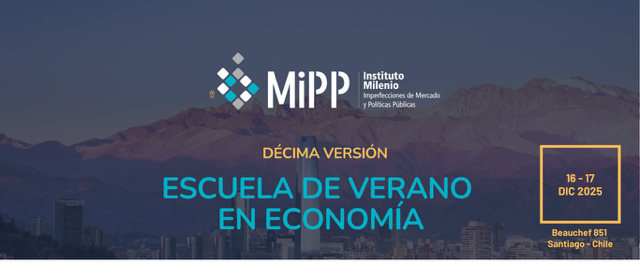
Décima Escuela de Verano en Economía
La Escuela de Verano en Economía del Instituto Milenio MIPP llega a su décima versión este 16 y 17 de…
Read more
Participa en “Aprende Central” 2025: Curso gratuito de educación financiera para la ciudadanía
Si te interesa aprender sobre economía y finanzas personales en un lenguaje sencillo y con contenidos pensados para todas las…
Read more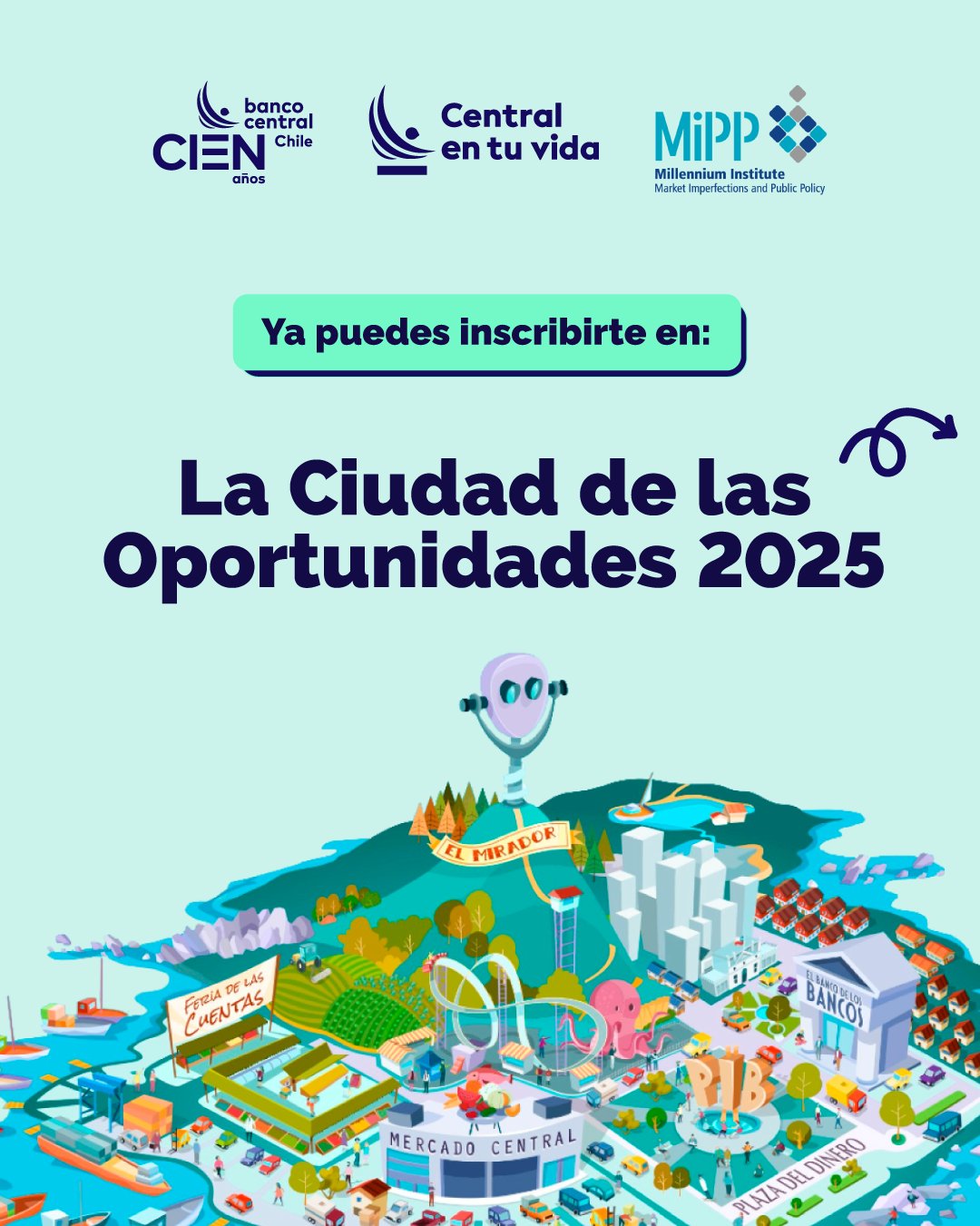
More than 2,500 Graduated Teachers: Enrollment Open for Free Financial Education Course
The Central Bank of Chile and the Millennium Institute MIPP at the University of Chile have opened enrollment for the…
Read more